

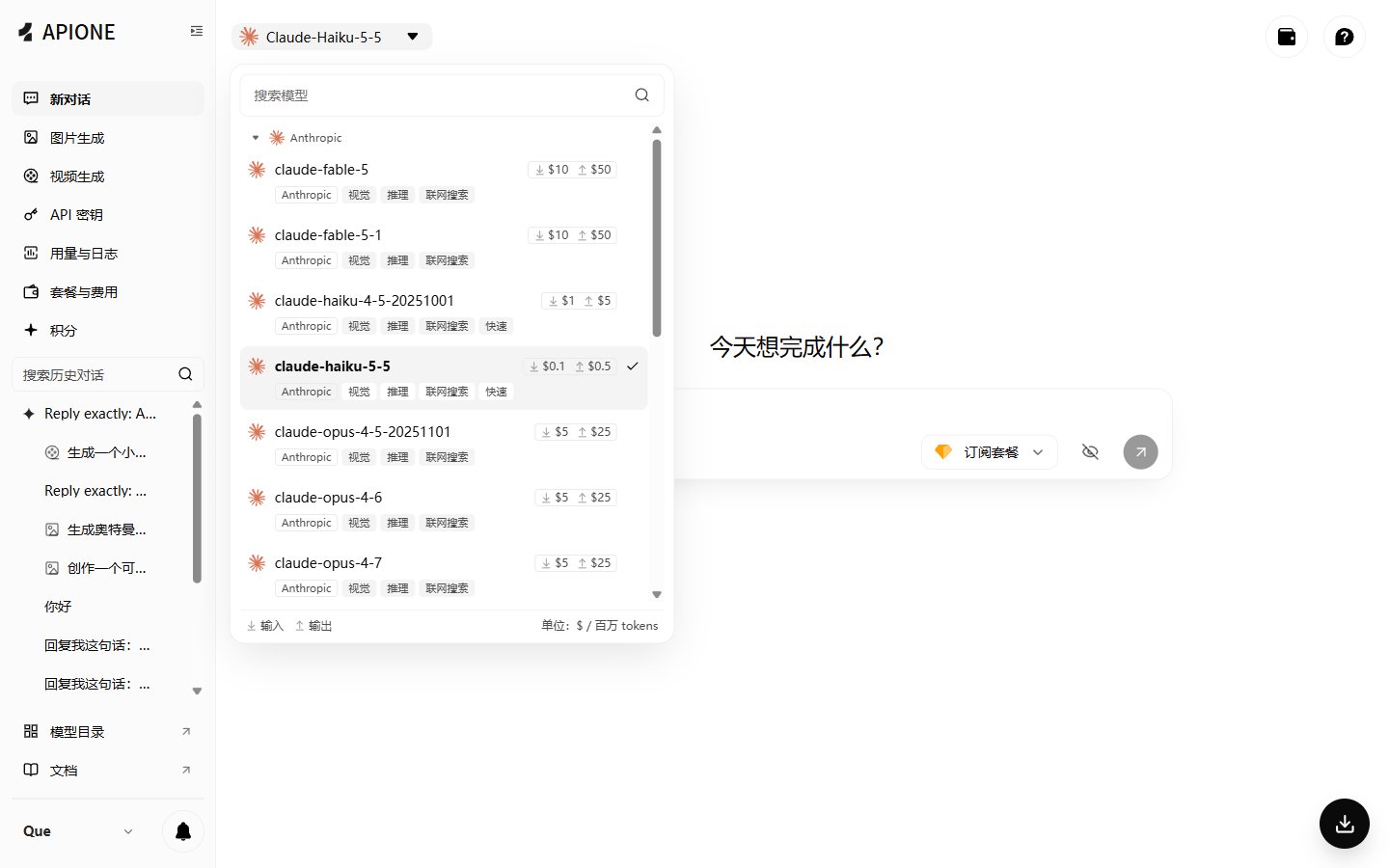
APIONE model selector with capabilities and input/output prices.
Answer five questions first
- Is the input pure text, images, audio, or video?
- Do you prioritize accuracy, speed, or cost?
- How much context and output length do you need?
- Will you use tool calling, JSON, image understanding, or code editing?
- Can your business accept switching models when one is temporarily unavailable?
Scenario dimensions
Do not rely only on leaderboards
Public leaderboards only reflect specific test sets. Actual business performance is also affected by prompts, protocol, tool definitions, context length, routing, and parameters. Prepare at least 10 to 30 sanitized business samples, and compare them under uniform prompts and scoring criteria.Build a small evaluation table
Recommended strategy
- Primary model: meets the quality floor and covers the main capabilities.
- Fast model: used for classification, rewriting, simple Q&A, and preprocessing.
- High-quality model: used only for complex tasks or escalation after failure.
- Media model: selected separately by frame size, duration, output format, and cost.
/v1/models and parameters from /v1/models/{model}/params; do not hard-code recommended model IDs into core business logic.
Next: Model parameters, Pricing groups, Request reliability.